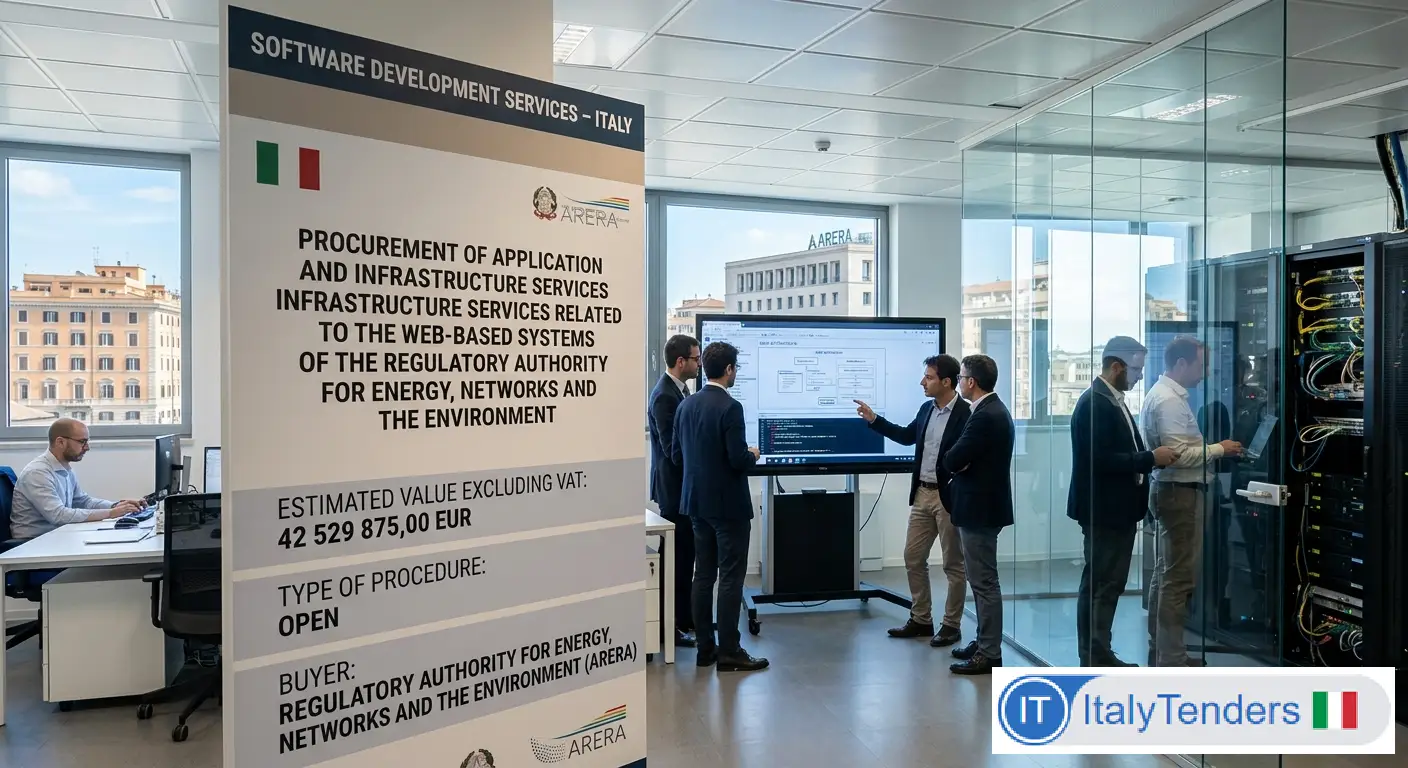
Italy's Energy Regulator Hands Its Web Systems to a Six Firm Consortium
12 Aug 2026
Standfirst ARERA, Italy's regulator for energy, networks and the environment, has awarded a 34.8 million euro contract for application and infrastructure services behind its web based systems to RTI Webgenesys, a consortium of six Italian IT firms led by Webgenesys S.p.a. Quality carried nine times the weight of price in the award decision. Introduction Regulators live and die by the reliability of their digital systems, the portals, databases and platforms through which utilities report data, consumers lodge complaints and markets get monitored. When those systems need updating or running day to day, the contractor behind them effectively becomes part of the regulator's own operational backbone. Autorità di Regolazione per Energia Reti e Ambiente, Italy's national regulator for energy, networks and environmental services, has just chosen who will manage exactly that infrastructure for the next four and a half years, awarding the work to a six company consortium. Why This Contract Matters ARERA's web based systems are the technical machinery behind its regulatory functions, covering everything from utility company reporting obligations to public facing information services. Keeping these systems running reliably and evolving them as regulatory needs change, is core infrastructure for how the regulator actually does its job. The award criteria in this tender put overwhelming weight on quality, at 90 of 100 points, against just 10 for price. That imbalance signals how much ARERA valued technical capability and service quality over cost competitiveness in choosing a partner for systems this central to its operations. Contract Timeline The winner was selected on 19 June 2026 and the contract was concluded on 31 July 2026. Contract performance is set to begin on 1 July 2026 and run until 31 December 2030. The notice recording this award was dispatched on 11 August 2026 and published in the Official Journal of the European Union on 12 August 2026, under OJ S issue 154/2026. Contract Overview ARERA ran an open procedure under Directive 2014/24/EU for application and infrastructure services related to its web based systems, classified under CPV code 72262000, Software development services, with additional classifications covering system and support services and computer facilities management services. The estimated value, matching both the procedure and lot level figures, was 42,529,875.00 EUR excluding VAT. The winning tender came in at 34,815,788.00 EUR, below the estimate and this figure also matches the notice's confirmed value of all contracts awarded. Eight tenders were received, all submitted electronically and the winning bid was formally ranked first among them. The contract also includes a disclosed option for a 24 month extension under article 120, paragraph 10, of Italy's public procurement code, Legislative Decree 36/2023, which would extend the relationship beyond the current end date of December 2030 if exercised, though this option is not guaranteed to be used. Key Contract Details Contracting AuthorityAutorità di Regolazione per Energia Reti e Ambiente (ARERA) Winning BidderRTI Webgenesys (consortium of six firms) Lead PartnerWebgenesys s.p.a. Contract TitleApplication and infrastructure services for ARERA's web based systems Procedure TypeOpen procedure, not accelerated Legal BasisDirective 2014/24/EU CPV Code (Main)72262000 Software development services Estimated Value (excl VAT)42,529,875.00 EUR Awarded Value (excl VAT)34,815,788.00 EUR Award CriteriaQuality 90 points, Price 10 points Contract Term1 July 2026 to 31 December 2030 Option24 month extension under article 120(10), Legislative Decree 36/2023 Tenders Received8, all submitted electronically EU FundingNot financed with EU funds Covered by GPAYes SubcontractingYes, 50 percent (value not disclosed) Review OrganisationTribunale Amministrativo Regionale per la Lombardia Project Scope The contract covers application and infrastructure services supporting ARERA's web based systems, spanning software development, system and support services and computer facilities management. The notice does not disclose further technical detail on the specific platforms, user volumes or system architecture involved beyond this general classification. About the Contracting Authority Autorità di Regolazione per Energia Reti e Ambiente ARERA is registered as a central government authority with general public services as its classified activity, based in Milan. It is Italy's independent regulator overseeing the energy, water and waste sectors and its web based systems underpin how it collects data from regulated companies and communicates with the market and the public. About the Organisations Involved RTI Webgenesys RTI Webgenesys is a temporary business grouping, an Italian consortium structure, bringing together six companies to jointly deliver this contract. Webgenesys s.p.a., based in Rome, leads the consortium. The other members are HSPI S.p.a., based in Bologna, TXT Ennova S.p.a., based in Turin, CerberX srl, based in Milan, TXT NOVIGO SRL, based in Brescia and IET Srl Società Benefit, based in Rome. The notice does not disclose how work is divided among the six members. The consortium declared subcontracting affecting 50 percent of the contract, though the monetary value of that subcontracted work was not disclosed. Tribunale Amministrativo Regionale per la Lombardia This is the Regional Administrative Court for Lombardy, based in Milan, named as the review organisation for this procurement. Appeals must follow the deadlines set out in article 120, paragraph 2, of Italy's Presidential Decree 104/2010, as amended. Procurement Analysis ARERA ran an open procedure and received eight tenders, a reasonably competitive field for a specialised, high value IT services contract of this kind. The award criteria description points bidders to article 18 of the tender specifications for detail, but the notice confirms the headline split directly: quality worth 90 points against price worth just 10. This heavily quality weighted structure indicates ARERA prioritised technical capability, methodology and service quality far above cost competitiveness, consistent with the sensitivity of contracting out infrastructure behind a national regulator's core digital operations. The winning consortium's declared 50 percent subcontracting level is notable, indicating that half of the contracted work, by percentage rather than confirmed value, will be delivered through subcontractors rather than directly by the six named consortium members. Additional Procurement Facts The contract is not financed with EU funds and is covered by the Government Procurement Agreement. No framework agreement or dynamic purchasing system applies, confirming this as a standalone services contract. The contract carries a disclosed 24 month extension option under Italian procurement law, giving ARERA flexibility to prolong the relationship without a fresh competitive tender if it chooses to exercise that option. Market and Industry Perspective The composition of RTI Webgenesys, combining a Rome based lead firm with partners spread across Bologna, Turin, Milan and Brescia, reflects how Italian IT services consortia are frequently built to pool complementary regional expertise and technical specialisms for large, complex public sector technology contracts. ARERA's decision to weight quality so heavily also reflects a broader pattern among Italian regulatory and public administration bodies awarding mission critical IT contracts, where the cost of choosing an underqualified contractor for core digital infrastructure can far outweigh any short term price savings. Economic Significance At 34.8 million euros over a term running to the end of 2030, with a possible further 24 month extension, this is a substantial, multi year commitment supporting one of Italy's key regulatory bodies. For the winning consortium, it secures a long term, technically demanding engagement at the heart of Italy's energy and utilities regulatory infrastructure. Future Procurement Opportunities The disclosed 24 month extension option is the clearest near term development to watch, since exercising it would extend RTI Webgenesys's role well beyond the current December 2030 end date without a new competitive tender. Beyond that, ARERA is likely to return to the market for a fresh competitive process once the contract, including any extension, eventually concludes. Opportunities for Suppliers IT services firms interested in future ARERA contracts or similar regulatory body technology contracts in Italy, should note the overwhelming weight given to quality in this tender, suggesting that demonstrated technical capability and methodology matter far more than aggressive pricing when competing for this category of work. The consortium structure used by the winning bidder, combining a lead firm with five partner companies spanning different Italian regions, may offer a template for firms seeking to assemble the breadth of capability needed to compete for similarly complex regulatory technology contracts in the future. What Businesses Should Watch IT services firms active in the Italian public sector should watch for whether ARERA exercises its 24 month extension option and should monitor for similar large scale, quality weighted technology tenders from other Italian regulatory authorities and central government bodies. ItalyTenders.com Procurement Intelligence This award illustrates how a national regulator protects its most critical digital infrastructure by prioritising technical quality almost to the exclusion of price, a 90 to 10 split that leaves little room for a technically weaker but cheaper bid to succeed. For contracts this central to regulatory operations, that approach reflects a rational prioritisation of reliability and capability over short term savings. Its strategic importance lies in what the consortium structure reveals about how complex Italian public sector IT contracts get delivered in practice. Six firms, spread across four cities, combined to win this contract, with half the resulting work set to flow through further subcontracting, illustrating how deeply layered the delivery chain can become even after a single named consortium wins an award. Suppliers can draw two lessons from how this competition played out. First, in heavily quality weighted tenders of this kind, investment in demonstrable technical methodology and track record matters far more than shaving margins on price. Second, assembling a multi firm consortium with complementary regional and technical strengths, as Webgenesys did, can be a decisive factor in winning large, complex public sector technology contracts that no single mid sized firm could credibly deliver alone. Supplier Takeaways Quality carried 90 of 100 available points, with price weighted at just 10, making technical capability the dominant factor in this award The winning bid came from a six firm consortium spanning Rome, Bologna, Turin, Milan and Brescia, led by Webgenesys s.p.a. Fifty percent subcontracting was declared, indicating a significant share of delivery will flow through further subcontractors A 24 month extension option exists under Italian procurement law, which could prolong the relationship without a new competitive tender Eight tenders were received in a competitive open procedure, with the winning bid ranked first Key Takeaways ARERA has awarded a 34,815,788.00 EUR contract for web based systems services to the six firm consortium RTI Webgenesys Award criteria weighted quality at 90 points against price at 10 points out of 100 The contract runs from July 2026 to December 2030, with a possible 24 month extension option Eight tenders were received and the winning bid came in below the 42.5 million euro estimated value The contract is covered by the Government Procurement Agreement but not financed with EU funds Conclusion This award keeps the digital infrastructure behind one of Italy's key regulatory bodies in the hands of a technically vetted, quality prioritised consortium for the rest of the decade. For RTI Webgenesys, it is a significant, multi year engagement at the centre of Italy's energy and utilities regulatory system. For the wider Italian IT services market, this tender is a clear signal that for mission critical public sector technology contracts, demonstrated quality and capability can matter far more than price and that consortium bidding remains a key route for firms seeking to compete at this scale. Source: Tenders Electronic Daily (TED), Contract Award Notice 558296-2026, Official Journal of the European Union, OJ S issue 154/2026, published on 12/08/2026.
View Details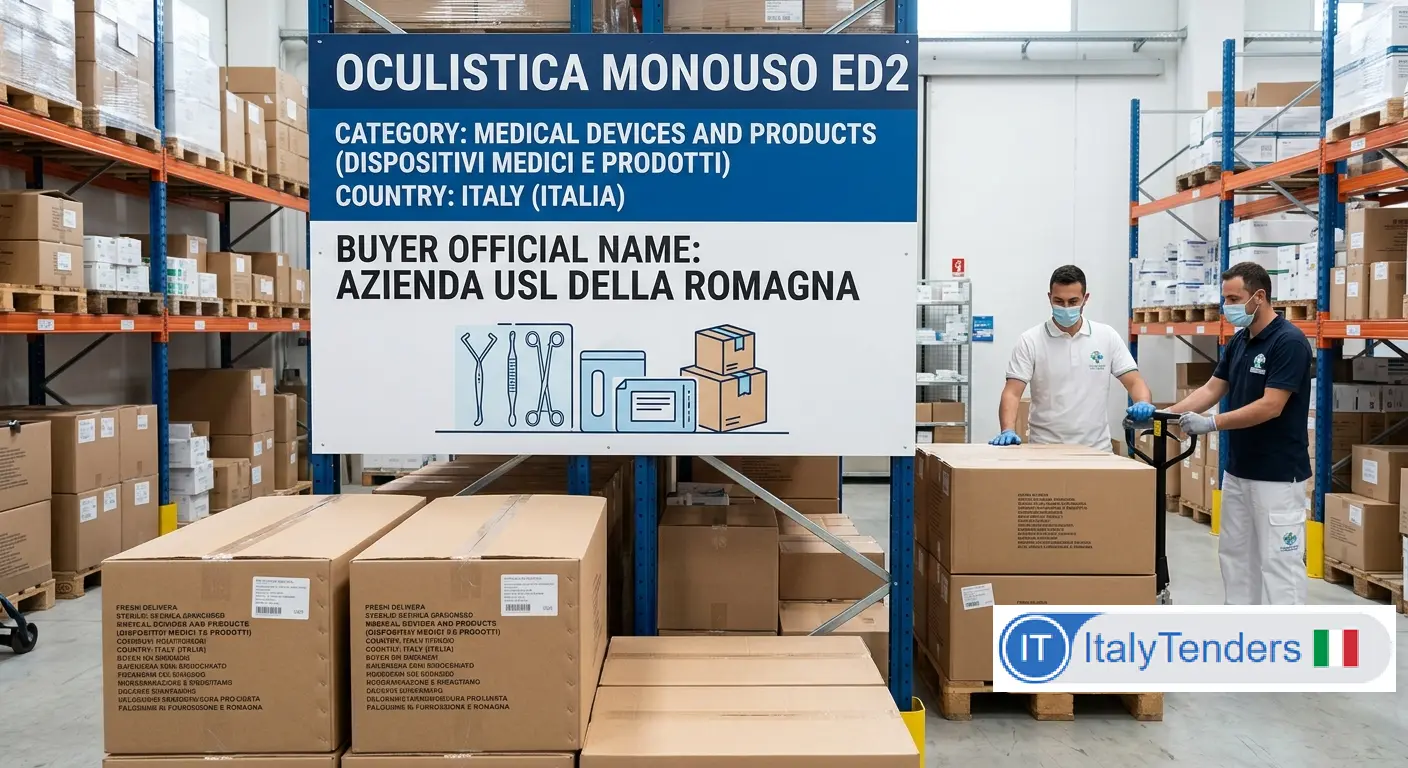
No Bids for a Niche Lens: One Small Corner of a EUR 35 Million Italian Ophthalmology Tender Comes Up Empty
11 Aug 2026
Standfirst Azienda USL della Romagna, a major regional health authority in Emilia Romagna, sought a supplier for a specialised intraocular lens used in cataract and aphakia surgery, one of 77 lots in a EUR 35 537 995.20 programme covering single use ophthalmology devices. Not a single tender was submitted for this specific lens and the health authority has formally closed that lot without a winner. Introduction Eye surgery depends on a remarkably specific supply chain, one where a hospital's ability to treat a particular condition can hinge on a single, narrowly defined product being available from a single qualified manufacturer. Azienda USL della Romagna, the public health authority serving a large part of Italy's Emilia Romagna region, discovered exactly that limitation when it went looking for suppliers of a specialised intraocular lens. The lens in question, a monofocal PMMA lens designed for aphakia correction with iris fixation, used when a patient's eye lacks its natural lens and standard capsular support for a replacement is not available, is one small piece of a much larger tender covering 77 separate lots of ophthalmology supplies. For this particular lot, the market simply did not respond. Why This Contract Matters Iris fixated intraocular lenses serve a specific, clinically important purpose: they give surgeons an option for patients who need lens replacement but lack the anatomical support structures a standard implant would normally rely on. A public health authority unable to source this specific device through its standard procurement channel faces a real, if narrow, gap in its surgical supply chain. The notice's broader context also matters. This is one lot within a 77 lot, EUR 35.5 million programme meant to secure Azienda USL della Romagna's ophthalmology supply needs across the board. A single failed lot within a programme this large is a useful reminder that even comprehensive, well resourced procurement exercises can leave gaps in highly specialised product categories. Contract Timeline Procedure type: Open procedure under Directive 2014/24/EU Competition for Lot 24 formally closed with no winner chosen Notice dispatched to the Publications Office: 10 August 2026 Published in the Official Journal, OJ S 153/2026: 11 August 2026 This notice is published as version 06, indicating multiple prior updates to the overall programme's results Contract Overview Azienda USL della Romagna ran an open procedure above EU thresholds to conclude a framework agreement with multiple economic operators for the supply of medical devices, single-use surgical instruments and panoramic systems for ophthalmology procedures, across the authority's hospital facilities. The overall programme spans 77 separately awardable lots, evaluated either on best price quality ratio, for a specified list of lots including this one or on lowest price for the remainder. This particular result notice addresses Lot 24, a monofocal PMMA lens for aphakia with iris fixation, estimated at EUR 541 500.00. No tenders were received and the authority has formally closed the lot without awarding it. Key Contract Details Contracting authorityAzienda USL della Romagna Overall programme titleOCULISTICA MONOUSO ED2 (Single-use Ophthalmology, Edition 2) Lot covered in this noticeLot 24, monofocal PMMA lens for aphakia with iris fixation CPV code33190000, Miscellaneous medical devices and products Procedure typeOpen procedure Legal basisDirective 2014/24/EU Overall programme estimated valueEUR 35 537 995.20, across 77 lots Lot 24 estimated valueEUR 541 500.00, excluding VAT Award criteria for Lot 24Best price quality ratio, technical score 70 points, economic score 30 points Tenders received for Lot 240 OutcomeNo winner chosen, competition closed, no tenders received GPA coverageNo EU fundingNo Framework structureOverall programme described as a multi-supplier framework agreement, though this lot's own technique field states no framework agreement applies, an inconsistency the notice does not resolve Review bodyTAR Emilia Romagna, Bologna Notice reference556039 2026, OJ S 153/2026, published 11 August 2026, notice version 06 Project Scope Lot 24 covers a single, specifically defined product: a monofocal intraocular lens made of PMMA, polymethyl methacrylate, a rigid plastic material long used in lens implants, designed for aphakia correction with iris fixation, meaning the lens is secured to the iris rather than relying on the eye's natural capsular support structure. This is a specialised device used in particular surgical circumstances rather than routine cataract replacement. The broader OCULISTICA MONOUSO ED2 programme covers medical devices, single use surgical instruments with accessories and panoramic imaging systems for ophthalmology procedures across Azienda USL della Romagna's hospital network, split into 77 lots to allow specialised suppliers to bid on individual product categories rather than requiring a single supplier to cover the full range. About the Contracting Authority Azienda USL della Romagna is a body governed by public law controlled by a regional authority, active in the health sector, based in Ravenna. It is one of the larger integrated regional health authorities in Italy's Emilia-Romagna region, managing hospital and health services across a wide territorial area that includes Ravenna and neighbouring provinces. About the Organisations Involved Azienda USL della Romagna As covered above, Azienda USL della Romagna is the buyer behind this tender, with its contact point listed as Annalisa Fabbri. TAR Emilia Romagna - Bologna The Regional Administrative Court for Emilia-Romagna, based in Bologna, is named as the review organisation for this contract, the standard venue in Italy for challenges to regional public procurement decisions. The notice defers specific review deadline information to the tender's own technical specifications document rather than stating it directly. ANAC Autorità Nazionale Anticorruzione Italy's National Anti-Corruption Authority is listed in the notice in the role of procurement service provider, reflecting ANAC's broader function supporting and overseeing public procurement processes across Italian contracting authorities, alongside its core anti-corruption mandate. Procurement Analysis The overall OCULISTICA MONOUSO ED2 programme was structured as an open procedure to establish a framework agreement with multiple suppliers across 77 lots, allowing the health authority to secure a broad range of ophthalmology products from specialised suppliers in each category. Lot 24 specifically was designated for evaluation under best price quality ratio criteria, weighting technical merit at 70 points against an economic score of 30 points, reflecting the clinical importance of getting a device like this right, not simply choosing the cheapest option. The complete absence of any tender for this lot is the central fact of this result. The reason recorded is the most direct possible: no tenders, requests to participate or projects were received. For a highly specialised device like an iris fixated aphakia lens, a product used in a relatively narrow set of surgical circumstances, a limited or even absent supplier response is more plausible than it would be for standard cataract lenses or routine ophthalmology disposables, though the notice does not explain the underlying market conditions behind the non-response. One inconsistency worth flagging: the overall procedure description explicitly frames this tender as being for the conclusion of a framework agreement with multiple economic operators, yet the specific technique field recorded against Lot 24 states no framework agreement applies. Given the lot received no bids at all, this discrepancy has no practical consequence for this particular result, but it is worth noting as an example of how lot level technical fields do not always align perfectly with a programme's overall stated structure. Additional Procurement Facts Lot 24 is confirmed as not financed with EU funds and as not covered by the Government Procurement Agreement. This notice is published as version 06, indicating the overall 77 lot programme's results have been updated or corrected multiple times since the original publication. No tenders were recorded as submitted electronically, from SMEs, as verified inadmissible or as inadmissible due to abnormally low pricing, confirming a complete absence of market response for this lot specifically. Market and Industry Perspective Intraocular lens manufacturing spans a wide spectrum from high volume standard cataract lenses, produced by several major global ophthalmic device manufacturers, to niche specialised variants like iris fixated aphakia lenses, which serve a smaller surgical population and may be produced by only a handful of specialist manufacturers globally. A zero bid outcome for a lot this specific is consistent with a market where very few suppliers carry this exact product configuration, particularly if existing suppliers were already committed elsewhere or judged the lot's terms unattractive relative to their broader business. Given the overall programme's scale, 77 lots and over EUR 35 million, it is likely that many of the other lots in this tender, covering more commonly used ophthalmology devices, attracted stronger competitive interest, making this failed lot a notable but likely isolated gap within an otherwise substantial and successful procurement exercise. Economic Significance At EUR 541 500.00, Lot 24 represents a modest fraction of the overall EUR 35.5 million programme, but its failure to attract any bid leaves Azienda USL della Romagna without a secured supply channel for this specific device category, a gap that matters clinically even if it is small in overall budgetary terms. Future Procurement Opportunities Health authorities facing a failed lot of this kind typically have the option to relaunch the tender for that specific product, potentially with revised terms, pricing assumptions or specification adjustments designed to attract supplier interest the second time. Given the specialised nature of this device, a retender with direct outreach to known manufacturers of iris fixated lenses may prove more effective than a further open, general publication. Opportunities for Suppliers Manufacturers and distributors of specialised intraocular lenses, particularly iris fixated aphakia correction lenses, should treat this notice as a direct signal of unmet demand from a major Italian regional health authority. With no competing bids to contend with, a supplier able to meet the lot's technical requirements would likely find a considerably more favourable competitive position than is typical in Italy's broader, more heavily contested ophthalmic device market. What Businesses Should Watch Whether Azienda USL della Romagna relaunches Lot 24 as a standalone retender and what terms accompany a second attempt. The outcomes of the remaining 76 lots within the broader OCULISTICA MONOUSO ED2 programme, not addressed in this notice. Whether similar niche ophthalmology device lots in other Italian regional health authority tenders show comparable non-response patterns. ItalyTenders.com Procurement Intelligence This notice is a useful reminder that even within large, well structured procurement programmes covering dozens of lots, individual highly specialised product categories can still fail to attract any supplier interest at all. The lesson for health system procurement teams is that niche clinical devices, serving small patient populations with specific anatomical or surgical needs, often warrant a different sourcing approach than routine, high volume medical supplies, potentially including direct market engagement with known specialist manufacturers before or alongside formal open tendering. For suppliers in the ophthalmic device space, a null result like this one is a clear, low risk signal of where genuine unmet demand exists. Unlike heavily contested standard lens categories, a lot that failed to attract even a single bid effectively guarantees a supplier meeting the technical specification a clear path to award on any retender, a rare position of leverage in public healthcare procurement. More broadly, this notice's sixth version status is a reminder that large, multi-lot health procurement programmes are living documents, updated repeatedly as individual lots are resolved, contested or in this case, left unfilled, over an extended period. Businesses tracking opportunities within programmes of this scale should expect to monitor them well beyond the initial publication, since outcomes for different lots can surface at very different times. Supplier Takeaways This lot for a specialised iris fixated aphakia lens received zero bids, indicating either a very narrow qualified supplier base or unattractive tender terms for this specific device category. The lot sat within a much larger EUR 35.5 million, 77 lot ophthalmology supplies programme, of which only this one lot's outcome is addressed in this notice. Award criteria for this lot weighted technical quality heavily, at 70 points against 30 for price, reflecting the clinical specificity of the device. A retender of this specific lot, potentially with revised terms or direct supplier outreach, is a realistic next step worth monitoring. Specialist manufacturers of this lens type face limited competition if and when this lot is relaunched. Key Takeaways Azienda USL della Romagna received zero tenders for Lot 24 of its OCULISTICA MONOUSO ED2 programme, covering a specialised monofocal PMMA lens for aphakia with iris fixation. The lot has been formally closed with no winner chosen, citing the complete absence of any submissions. The lot sat within a much larger EUR 35 537 995.20 programme covering 77 lots of ophthalmology supplies. Award criteria for this lot weighted technical quality at 70 points against a 30 point economic score. This notice does not address the outcomes of the programme's other 76 lots. The notice is published as its sixth version, reflecting multiple updates to this large programme's results over time. Conclusion Somewhere in the gap between a 77 lot tender's overall success and one small, empty result sits a genuinely useful signal for the ophthalmic device market. Azienda USL della Romagna secured supply for the overwhelming majority of its ophthalmology device needs through this programme, but for one narrowly specialised lens, the market had nothing to offer. For the right supplier, that gap is an opportunity waiting to be filled. Source: Tenders Electronic Daily (TED), Contract Award Notice 556039-2026, Official Journal of the European Union, OJ S 153/2026, published on 11 August 2026.
View Details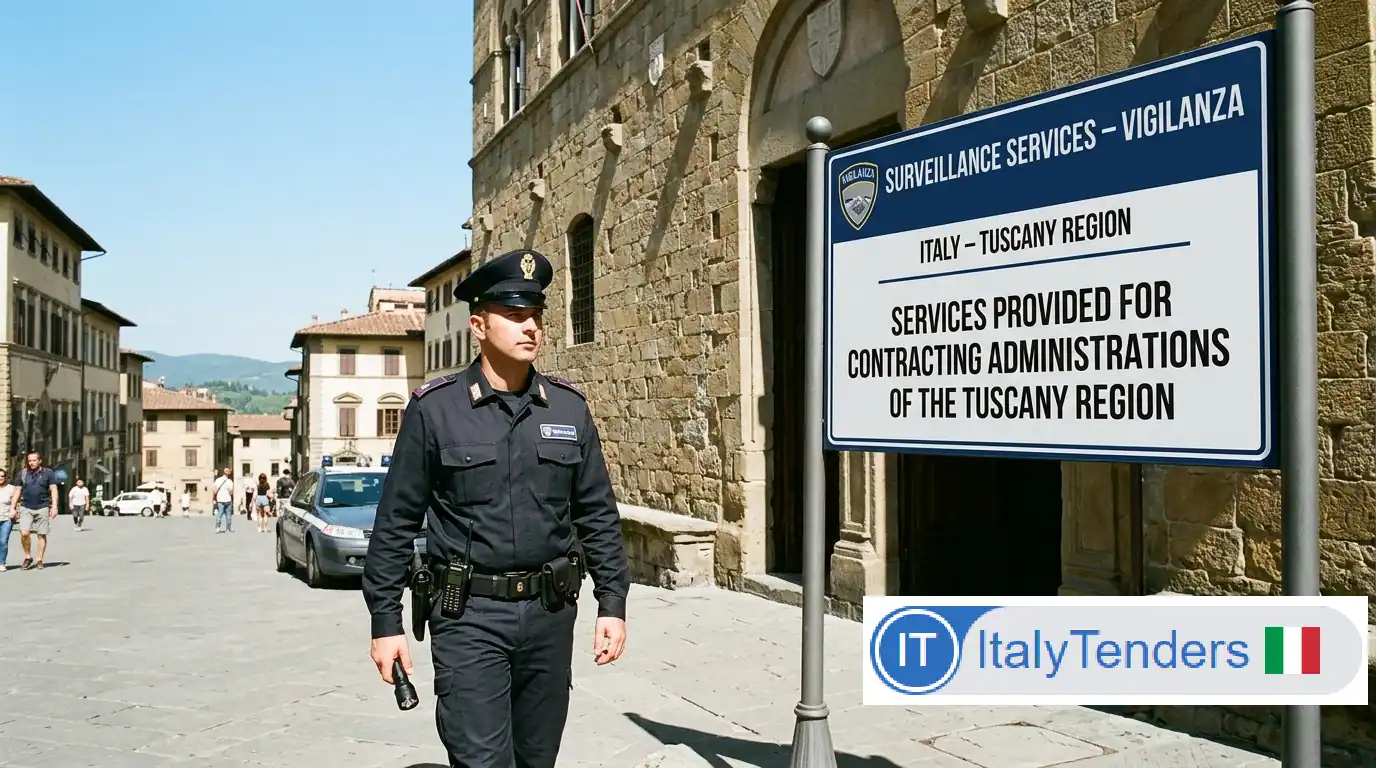
Tuscany Locks In a 350 Million Euro Security Framework Across Its Hospitals and Public Bodies
10 Aug 2026
Standfirst Regione Toscana has awarded surveillance and related security services worth a combined 350 million euros across six lots covering its healthcare system and other public administrations. Three winning groups, led by Sicuritalia, Istituto di Vigilanza Coopservice and Worsp Security Group, will now guard hospitals, regional offices and public buildings across Tuscany's three operational zones. Introduction Hospitals, regional government offices and public buildings across Tuscany all need physical security, guards who control access, monitor premises and respond to incidents around the clock. Coordinating that need across an entire region, rather than letting each hospital or agency arrange its own guards, is exactly the kind of large scale framework procurement regional governments increasingly rely on. Regione Toscana has just closed this kind of framework, splitting the region into three geographic zones and two categories of client body, health service entities and other public administrations, then appointing security contractors to each combination. Why This Contract Matters At 350 million euros, this is one of the larger regional security services procurements disclosed on TED and it will shape how surveillance services are delivered across virtually all of Tuscany's public sector for years to come. Hospitals in particular depend on reliable, well trained security staff to manage access control, protect staff and patients and respond to incidents in often high pressure clinical environments. The framework's structure, splitting healthcare bodies from other public administrations within each geographic zone, also reflects how Tuscany has tried to match contractor scale and specialisation to the very different security needs of a hospital compared with, say, a regional administrative office. Contract Timeline Winners across all six lots were selected on the same date, 5 August 2026 and the resulting contracts were concluded uniformly on 7 August 2026. The notice recording these awards was dispatched on 7 August 2026 and published in the Official Journal of the European Union on 10 August 2026, under OJ S issue 152/2026. Contract Overview Regione Toscana ran an open procedure under Directive 2014/24/EU for surveillance services and related activities, classified under CPV code 79714000, Surveillance services, covering contracting bodies across the region, including healthcare enterprises and entities of the Tuscany Regional Health Service, the regional government itself, regional agencies and other non health public bodies operating within the region. The overall estimated value, matching the framework's maximum, is 350,096,055.00 EUR excluding VAT. This is structured as a framework agreement without reopening of competition, split across six lots defined by three geographic zones, known as Aree Vaste, Centro, Nord Ovest and Sud Est, each divided further into a lot for health service bodies and a lot for other public administrations. Combined awarded tender values across the six lots total 139,566,289.56 EUR, notably lower than the 350.1 million euro estimated ceiling. As this is a framework agreement, the estimated value represents a maximum authorised spending ceiling for the contracting bodies that adhere to it, not a guarantee that the full amount will be spent. Key Contract Details Contracting AuthorityRegione Toscana Contract TitleVigilanza (Surveillance), open procedure for surveillance services for Tuscany's contracting bodies Procedure TypeOpen procedure, not accelerated Legal BasisDirective 2014/24/EU CPV Code79714000 Surveillance services Framework StructureFramework agreement without reopening of competition, 6 lots Overall Estimated and Maximum Framework Value (excl VAT)350,096,055.00 EUR Combined Awarded Tender Values (excl VAT)139,566,289.56 EUR Award CriteriaMost economically advantageous tender, price 30 points, technical quality 70 points EU FundingNot financed with EU funds, all lots Covered by GPANo, all lots Winners Selected5 August 2026, uniformly across all lots Contracts Concluded7 August 2026, uniformly across all lots Review OrganisationTAR Toscana (Regional Administrative Court of Tuscany) Procurement Service ProviderANAC, Italy's National Anti-Corruption Authority Project Scope The six lots split Tuscany into three operational zones. Lots 1 and 2 cover healthcare enterprises and entities of the Tuscany Regional Health Service in the Centro and Nord Ovest zones respectively, while Lots 3 covers the same category in the Sud Est zone. Lots 4, 5 and 6 mirror this structure for other, non health public administrations operating in the Centro, Nord Ovest and Sud Est zones respectively. Contract values scale with the size and needs of each zone and client category, ranging from the largest lot, Lot 2 covering healthcare bodies in the Nord Ovest zone at an estimated 129.78 million euros, down to the smallest, Lot 6 covering non health bodies in the Sud Est zone at an estimated 3.36 million euros. The contracting authority has not disclosed further technical detail on guard numbers, shift patterns or specific site counts within this notice. About the Contracting Authority Regione Toscana Regione Toscana is registered as a regional authority with general public services as its classified activity, based in Florence. As Tuscany's regional government, it ran this framework on behalf of a wide range of contracting bodies across the region, from hospitals and health service entities to its own regional agencies and other non health public administrations. About the Organisations Involved Sicuritalia Ivri S.p.A. and Corpo Vigili Giurati S.p.A. A temporary business grouping led by Sicuritalia Ivri S.p.A., based in Como and trading also as Sicuritalia S.p.A., together with Corpo Vigili Giurati S.p.A., based in Florence, won both Lot 1, covering healthcare bodies in the Centro zone and Lot 2, covering healthcare bodies in the Nord Ovest zone. Sicuritalia Ivri is recorded as the leader of the tendering party on both lots. On Lot 2, a third company, G.I.VI. S.r.l., based in La Spezia, also joined as a winning member of the grouping. The tender value for Lot 1 was 45,397,822.74 EUR and for Lot 2 was 52,744,340.40 EUR, both below their respective estimated values. Both winning tenders are recorded as ranked first among competing bids and subcontracting status for both is recorded as not yet known. Istituto di Vigilanza Coopservice S.p.A. and Il Globo Vigilanza S.r.l. A temporary business grouping led by Istituto di Vigilanza Coopservice S.p.A., based in Reggio nell'Emilia, together with Il Globo Vigilanza S.r.l., based in Pistoia, won three lots: Lot 3, covering healthcare bodies in the Sud Est zone, Lot 4, covering non health bodies in the Centro zone and Lot 6, covering non health bodies in the Sud Est zone. Istituto di Vigilanza Coopservice is recorded as the leader of the tendering party across all three lots. Tender values were 17,475,252.24 EUR for Lot 3, 19,297,185.90 EUR for Lot 4 and 815,517.48 EUR for Lot 6, all below their respective estimated values. Subcontracting status is recorded as not yet known for all three lots. Worsp Security Group S.r.l. Unipersonale Worsp Security Group S.r.l. Unipersonale, based in Campiglia Marittima, won Lot 5, covering non health public administrations in the Nord Ovest zone, as a sole winner rather than as part of a consortium. Its tender value was 3,835,870.80 EUR, below the lot's estimated value of 12,181,797.50 EUR. TAR Toscana and ANAC TAR Toscana, the Regional Administrative Court of Tuscany, is named as the review organisation for this procurement, the standard body for hearing challenges to Italian regional procurement decisions. Review deadline details are not stated directly in the notice, with bidders directed to the tender specifications instead. ANAC, Italy's National Anti-Corruption Authority, is named as the procurement service provider, reflecting its oversight role within the national public contracts system. Procurement Analysis Regione Toscana structured award decisions around the most economically advantageous tender standard, splitting scoring between a price score worth 30 points and a technical score worth 70 points. This heavy technical weighting suggests the region prioritised service quality, staffing competence and operational planning well above cost in choosing its security contractors. Each lot recorded an unusually high number of electronically submitted tenders, ranging from 176 on the smallest lots to 265 on the largest. This figure is notably high for a specialised regional security services contract and stands out against the more modest bidder counts typically seen in comparable European tenders of this kind. The contracting authority has not explained this pattern and it should be read as a genuine feature of this specific competition rather than assumed to reflect a typical level of market interest in security services tenders generally. Across all six lots, the winning tender values came in below the estimated lot values, in some cases substantially so, for example Lot 1's awarded value of 45.4 million euros against an estimate of 112.3 million euros. Since this is a framework agreement rather than a fixed price contract, this gap likely reflects how framework values represent a maximum authorised ceiling for adhering bodies rather than a fixed spending commitment and actual usage will depend on how much individual hospitals and public bodies actually draw down over the framework's life. Additional Procurement Facts None of the six lots are financed with EU funds and none are covered by the Government Procurement Agreement. The framework operates without reopening of competition, meaning contracting bodies adhering to each lot will work directly with the appointed winner rather than running further mini competitions. Subcontracting status is recorded as not yet known across every winning tender in this notice, rather than a confirmed yes or no. Market and Industry Perspective The winner list reflects a mix of Italy's larger national private security groups, Sicuritalia and Coopservice among the country's most prominent security services providers, alongside smaller regionally rooted firms such as Corpo Vigili Giurati, Il Globo Vigilanza, G.I.VI. and Worsp Security Group. This pattern, larger national groups partnering with smaller regional specialists through consortium bids, is a common structure in Italian security services procurement, allowing bidders to combine national scale with local operational knowledge. The presence of a single, standalone winner on the smallest lot, Worsp Security Group on Lot 5, alongside consortium wins on every other lot, suggests that lot size and complexity may influence whether bidders find it necessary to team up with a partner. Economic Significance With an overall framework ceiling of 350 million euros and confirmed awarded tender values already totalling close to 140 million euros, this procurement represents a very substantial commitment of Tuscany's public security services budget, spanning its entire hospital network and much of its regional public administration. For the winning contractors, appointment across multiple lots, as seen with both the Sicuritalia led and Coopservice led groupings, secures a broad and recurring revenue base across Tuscany's public sector security needs for the duration of the framework. Future Procurement Opportunities Because this framework operates without reopening of competition, individual contracting bodies across Tuscany will engage directly with their zone's appointed contractor rather than running further competitive rounds during the framework's life. The next major procurement opportunity for competing security firms is therefore likely to arise only when this framework itself is renewed or re-tendered. Security firms not appointed to this framework should monitor Regione Toscana's procurement notices for the eventual renewal cycle and should also watch for similar regional security framework tenders in other Italian regions structured along comparable geographic and client type lines. Opportunities for Suppliers Security services firms operating in or near Tuscany should note the framework's heavy technical weighting, at 70 of 100 points, suggesting that demonstrated service quality and operational planning matter more than aggressive price bidding in this buyer's evaluation approach. The consortium structures used by the two largest winning groups also point to an opportunity for smaller regional security firms to partner with larger national providers on future similar tenders, combining local knowledge with the scale needed to service large multi site healthcare and public administration contracts. What Businesses Should Watch Security services providers active in the Italian public sector should watch for how usage develops against this framework's substantial ceiling relative to its already lower awarded tender values, since that gap will show how much of the 350 million euro maximum is actually drawn upon over the contract's life. It is also worth monitoring whether other Italian regions adopt a similar geographic zone and client type lot structure for their own security services frameworks. ItalyTenders.com Procurement Intelligence This award illustrates how large Italian regional governments are structuring essential public sector security services, using framework agreements without reopening of competition to give appointed contractors direct, ongoing relationships with the hospitals and public bodies in their assigned zone, rather than running repeated competitive rounds for individual sites. Its strategic importance lies in the lot design itself, separating healthcare bodies from other public administrations within each geographic zone. This suggests Regione Toscana recognised that hospital security, with its clinical environment and patient facing considerations, may require different contractor profiles or specifications than general public building security, even within the same region. Suppliers can draw a clear lesson from how these six lots were won. Consortium bidding, pairing a larger national security group with a smaller regional specialist, secured five of the six lots, while only the smallest lot went to a single standalone bidder. This suggests that for contracts of meaningful scale in this sector, teaming arrangements may now be close to a practical requirement for winning, rather than simply one viable strategy among several. Firms targeting future similar regional security tenders in Italy should also take note of the heavy technical weighting seen here and should invest accordingly in building out demonstrable service quality credentials, staff training programmes and operational planning capability, since price alone appears to carry limited influence in a scoring system that reserves 70 of 100 points for technical merit. Supplier Takeaways Technical quality carried 70 of 100 available points, with price weighted at just 30, favouring demonstrated service capability over cost alone Consortium bids won five of the six lots, with only the smallest lot going to a standalone single company bidder Awarded tender values came in well below estimated lot values across all six lots, consistent with framework ceilings representing maximums rather than guaranteed spend The framework operates without reopening of competition, meaning appointed winners will serve their zone directly rather than face further mini competitions An unusually high number of electronic tenders was recorded on every lot, a pattern worth monitoring in future similar Italian regional tenders Key Takeaways Regione Toscana has awarded surveillance services across six lots with a combined framework ceiling of 350,096,055.00 EUR Three winning groups secured the six lots: Sicuritalia Ivri led consortium (Lots 1 and 2), Istituto di Vigilanza Coopservice led consortium (Lots 3, 4 and 6) and standalone winner Worsp Security Group (Lot 5) Combined confirmed awarded tender values across all six lots total approximately 139.57 million euros Award criteria weighted technical quality at 70 points and price at 30 points None of the six lots are EU funded or covered by the Government Procurement Agreement Conclusion This framework secures physical security coverage across virtually all of Tuscany's hospitals, regional offices and public buildings for years to come, delivered through three winning groups matched to specific zones and client types. For Regione Toscana, it consolidates what could have been dozens of separate local security contracts into a single, coordinated regional structure. For the winning contractors, from national groups like Sicuritalia and Coopservice to regional and single site specialists like Worsp Security Group, it secures a substantial and geographically defined position in one of Italy's larger public sector security services markets, with the real scale of eventual revenue depending on how much of the 350 million euro ceiling contracting bodies actually d€raw upon. Source: Tenders Electronic Daily (TED), Contract Award Notice 551498-2026, Official Journal of the European Union, OJ S issue 152/2026, published on 10/08/2026.
View Details